
Bringing home a new puppy is exciting. The 2am toilet trips? Maybe slightly less so.
Toilet training doesn't need to be complicated. The key is giving your puppy a consistent place to go, taking them there often, and making a very big deal of it when they get it right.
And if you're raising a puppy in a Brisbane apartment or home without easy backyard access, the same principles apply — you may just need to bring the backyard a little closer.
Here's how to get started.
Start with one consistent toilet spot
Before your puppy comes home, decide where you want them to toilet.
If you have a secure backyard, this might simply be one particular patch of grass. If you're raising a puppy in a Brisbane apartment, high-rise or home without a backyard, that could be a dedicated grass potty on your balcony or another appropriate area.
The important thing is consistency. Rather than changing locations, give your puppy one predictable place that they can begin to associate with going to the toilet.
Toilet training a puppy in a Brisbane apartment
Apartment puppies have an extra challenge: the nearest patch of grass might be a lift ride and several minutes away. That's not always much help when a little puppy decides they need to wee right now.
A real grass potty can give your puppy a consistent toilet spot at home while introducing them to the feel and smell of a natural grass surface.
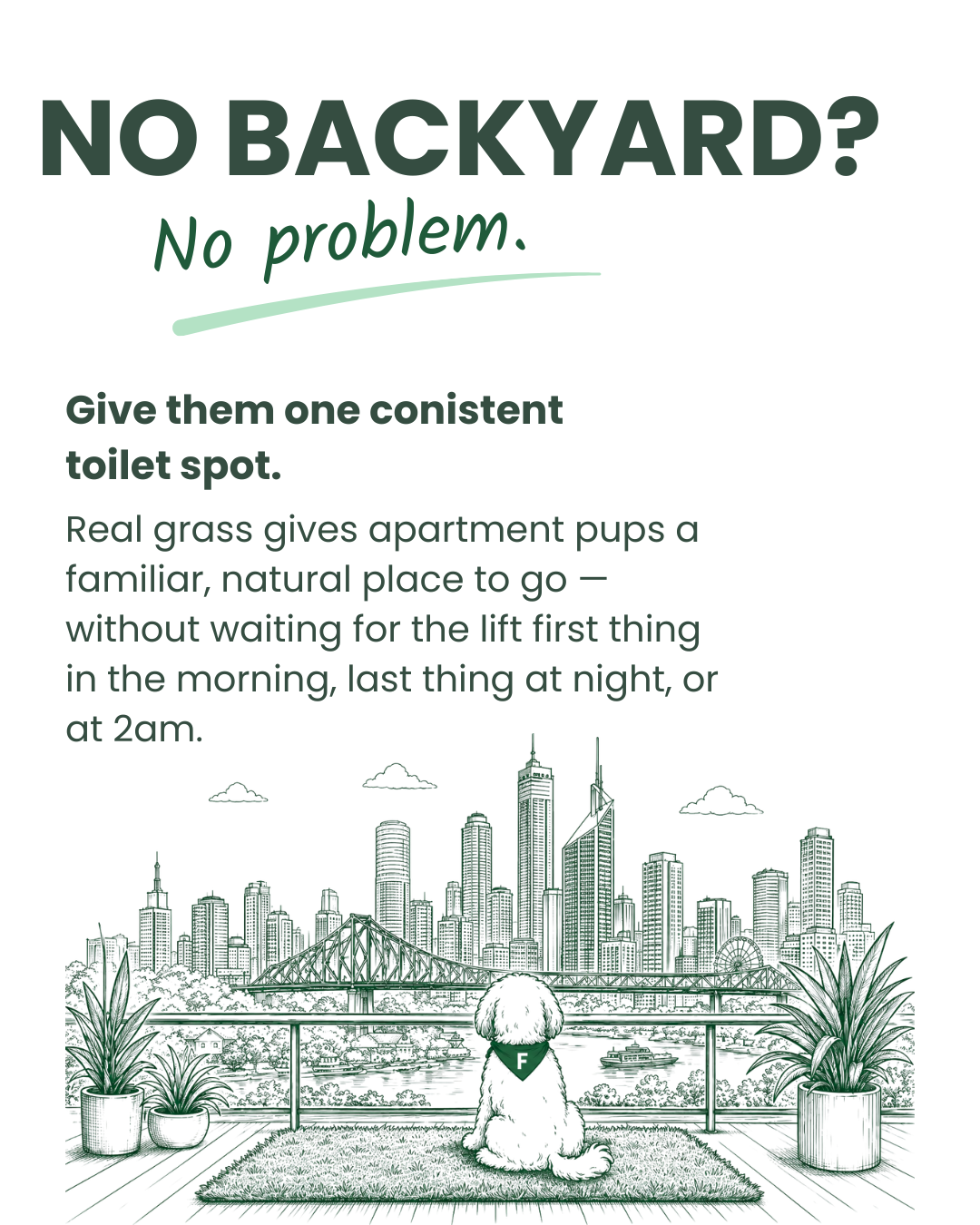
Franco Tip: Put the potty somewhere easy for your puppy to reach and try not to keep moving it. You're trying to teach one very simple association: this is where I go.
Puppies love a routine
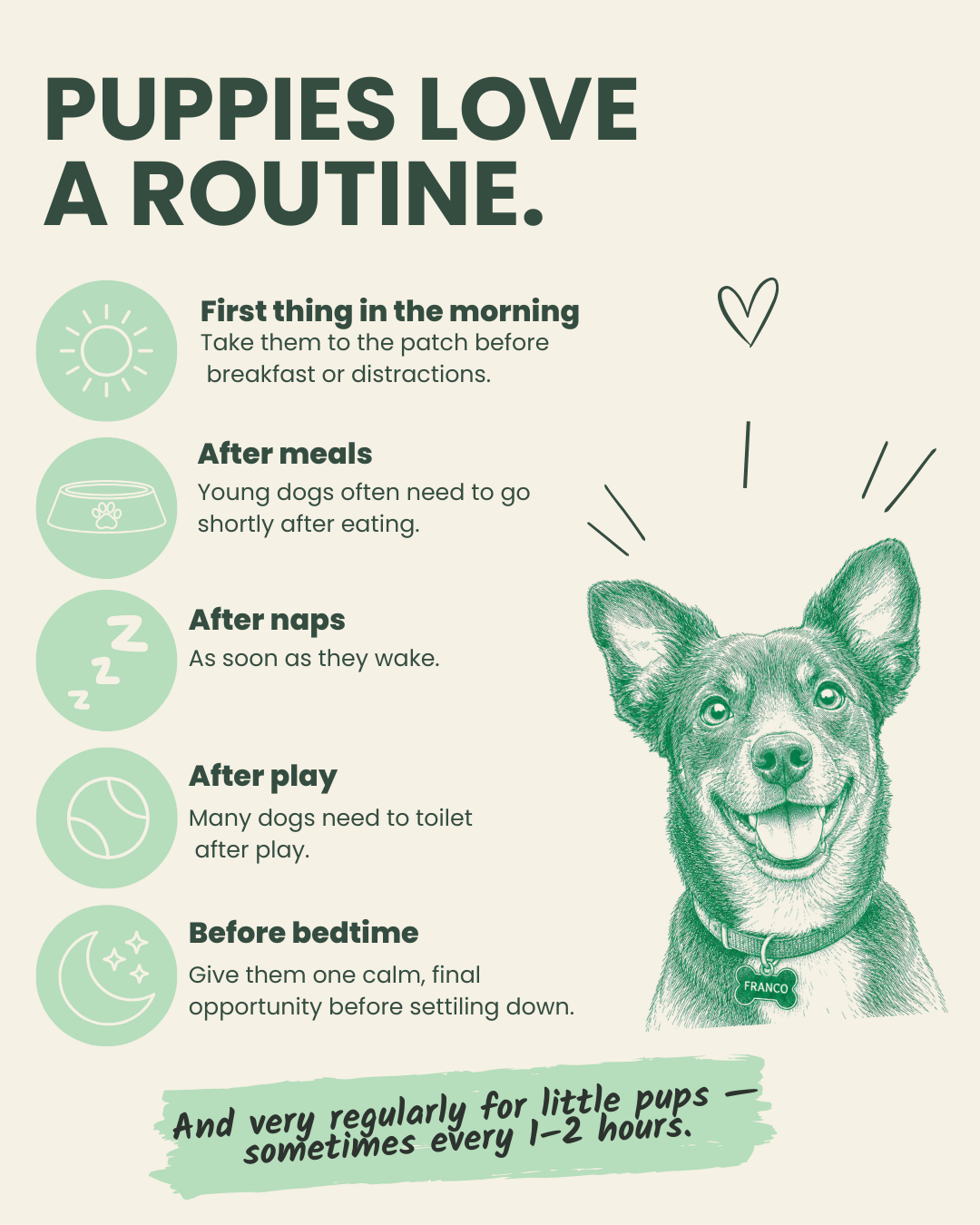
Young puppies need frequent opportunities to toilet, and owners shouldn't rely solely on the puppy signalling. The easiest way to get ahead is to offer a toilet break around the moments when puppies are most likely to need one.
- First thing in the morning
- Shortly after meals or drinking
- After waking from a nap
- After play or excitement
- Before bedtime
- Regularly throughout the day while very young
Watch your individual puppy too. You'll quickly start learning their rhythm.
Learn the signs your puppy needs to go
Puppies don't always make a dramatic announcement. The signs can be small, especially when they're distracted by a new home. Look for:
- Sniffing the floor or following a scent
- Circling or walking in a tight little loop
- Wandering away from play
- Restlessness, pacing or suddenly stopping
- Heading towards their usual toilet area
- Squatting or starting to squat
Giving your puppy plenty of opportunities to succeed is easier than trying to correct accidents afterwards. If you spot a sign, calmly take them to their designated toilet spot straight away.
Reward. Every. Successful. Wee.
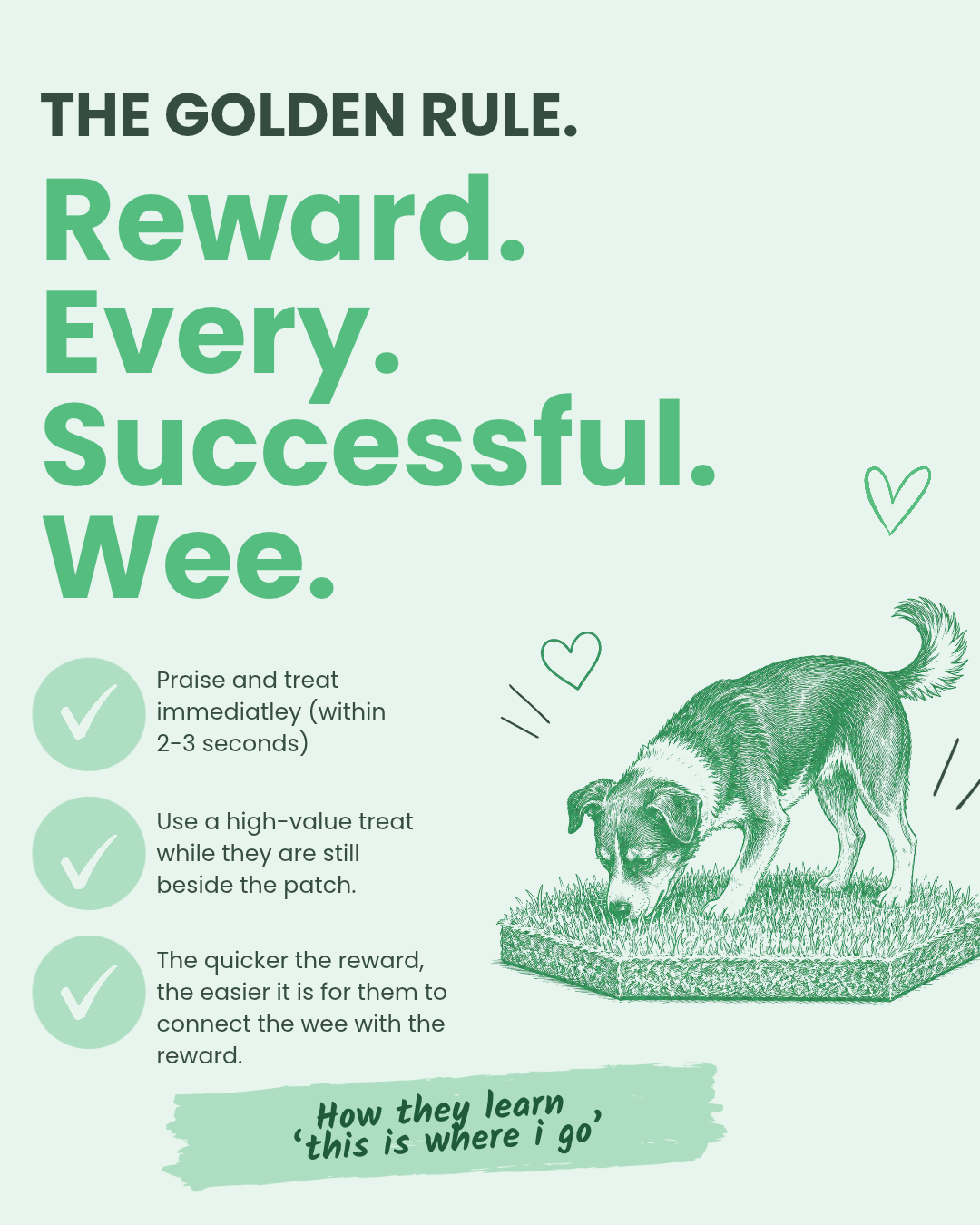
When your puppy toilets in the right place, reward them immediately.
Praise them and offer a high-value treat while they're still beside their toilet spot. The closer the reward is to the behaviour, the easier it is for your puppy to understand what earned it.
You want your puppy to make one very simple connection: I wee here → excellent things happen.
Be enthusiastic. Toilet training is one of the rare times in life when celebrating a wee is entirely appropriate.
Accidents? No big deal.
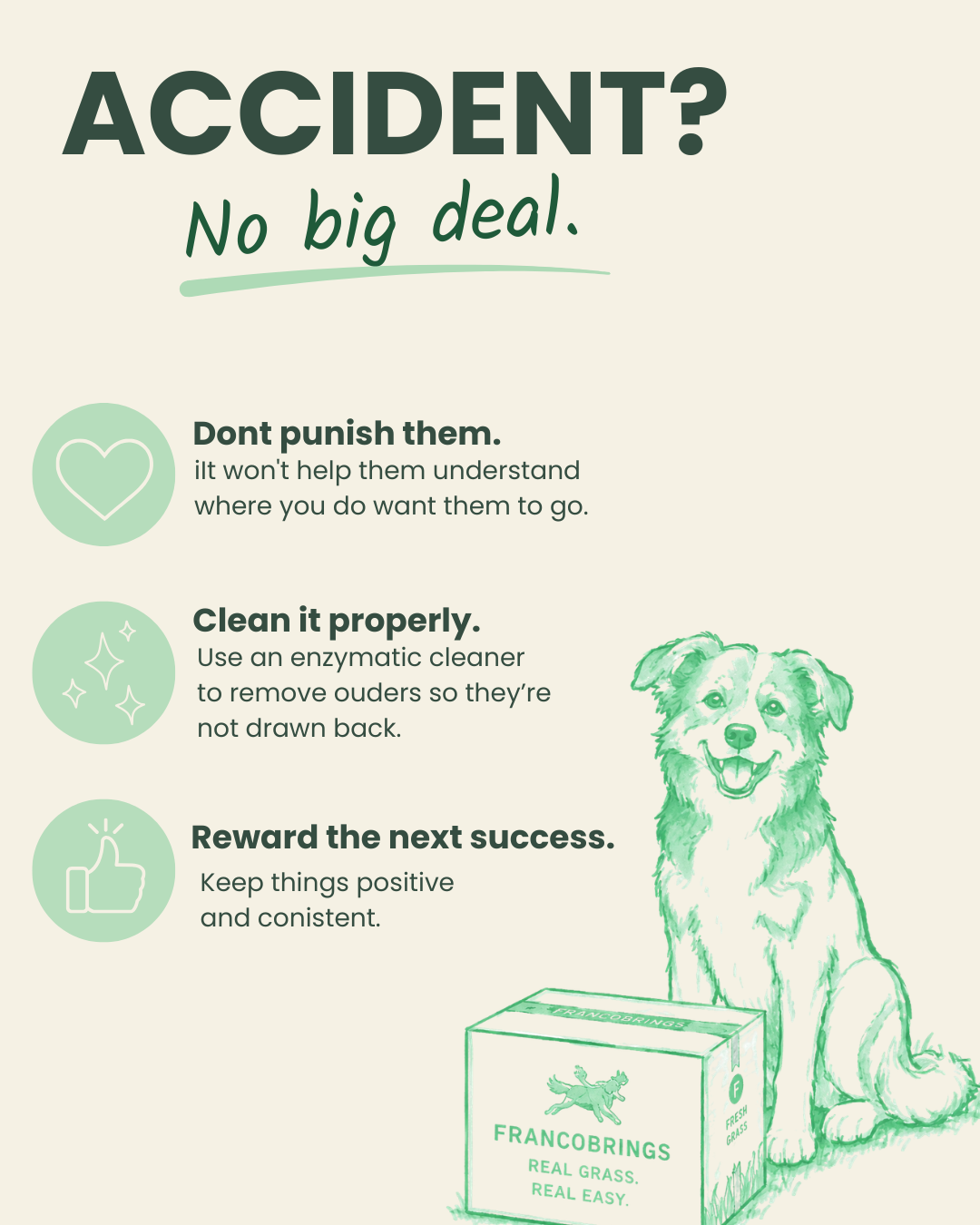
Accidents are a normal part of learning. Your puppy is learning a new habit while their bladder control is still developing, so an accident is information — not a reason to punish them.
If you catch an accident happening, interrupt gently and move your puppy to their toilet spot if you can. Don't scold them after the event. They won't understand what the punishment was for, and fear can make toilet training harder.
- Clean the area thoroughly.
- Use an appropriate enzymatic or pet urine cleaner to help remove residual odour.
- Take the puppy to their designated toilet area more frequently.
- Reward the next successful toilet.
If your puppy repeatedly toilets in the same wrong place, look at what's happening immediately beforehand. You may simply need to offer a toilet break earlier.
What if my puppy won't use their grass potty?
Some puppies understand a grass potty immediately. Others need a little time to decide that this new patch is an approved toilet. Keep the training calm and predictable:
- Keep it in one consistent location.
- Take them there at likely toilet times.
- Let them sniff and investigate without pressure.
- Reward immediately when they use it.
- Don't turn toilet time into playtime.
- Make sure the potty is large enough for them to comfortably stand, turn and toilet.
Having trouble getting your pup started? My Dog Won't Use the Grass Potty: What Should I Do? →
Puppy pads or real grass?
Puppy pads can be useful in some situations. They can provide a temporary indoor option, help overnight or bridge the gap when your puppy's vaccination plan means outdoor access is limited. They are not inherently bad, and using them does not mean you've failed at puppy toilet training.
If the long-term goal is toileting outdoors on grass, introducing a grass surface from the beginning can reduce the need to change the type of toilet surface later. A real grass puppy toilet gives your puppy a clear, natural surface to learn, which can be particularly useful in an apartment where getting outside quickly is difficult.
For a balanced comparison, read Pee Pads vs Real Grass: Which Is Better for Apartment Puppies? →
Setting up a puppy toilet on your balcony
A balcony puppy toilet works best when it feels like a calm, predictable part of the home rather than a temporary emergency station. Choose a quiet, accessible area and keep the route to it as easy as possible.
- Choose a quiet, accessible area.
- Give your puppy enough grass space to comfortably stand and turn around.
- Keep the location consistent.
- If the balcony is exposed to Brisbane rain, a reusable tray underneath the grass potty can make the setup easier to move and make cleaning underneath easier.
- For male puppies that lift their leg, a Pee Guard can provide additional protection around the potty area.
Build your puppy potty setup
Once the training basics are in place, these optional pieces can make an apartment or balcony setup easier to live with.
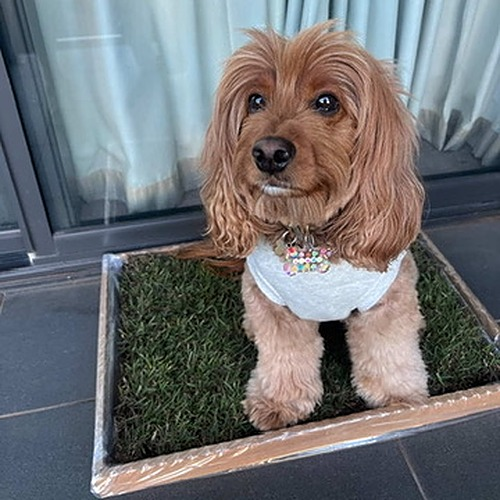
Grass Potty
Fresh real grass in Small, Medium or Large.
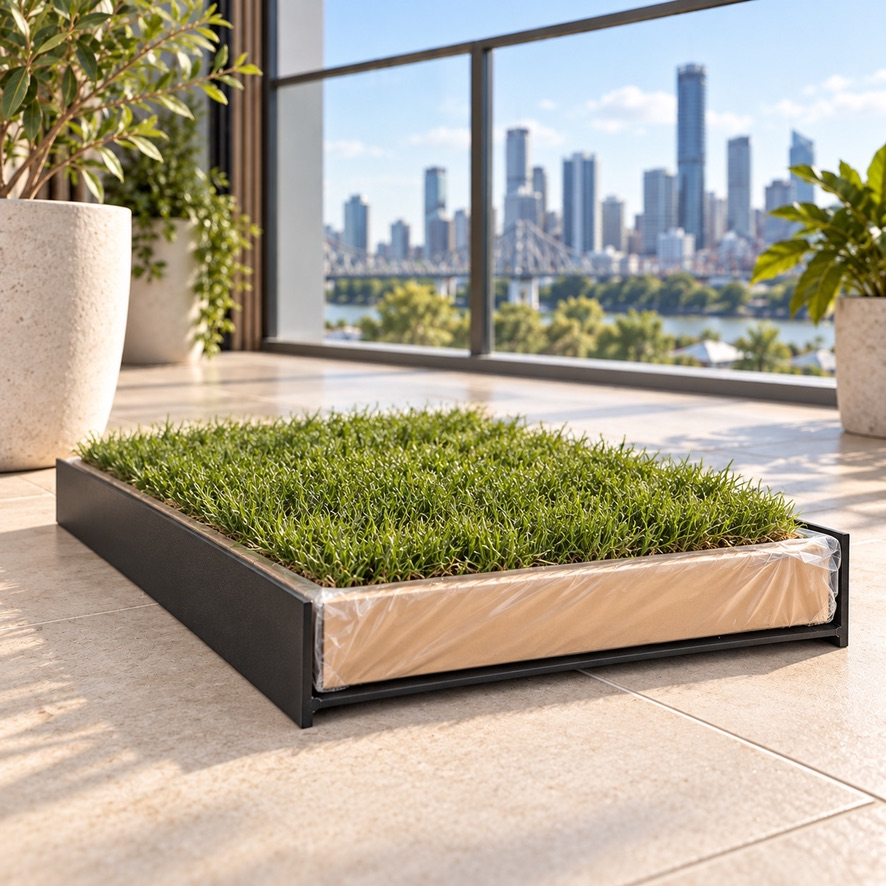
Reusable Tray
An easier-to-move, easy-clean base for your potty.
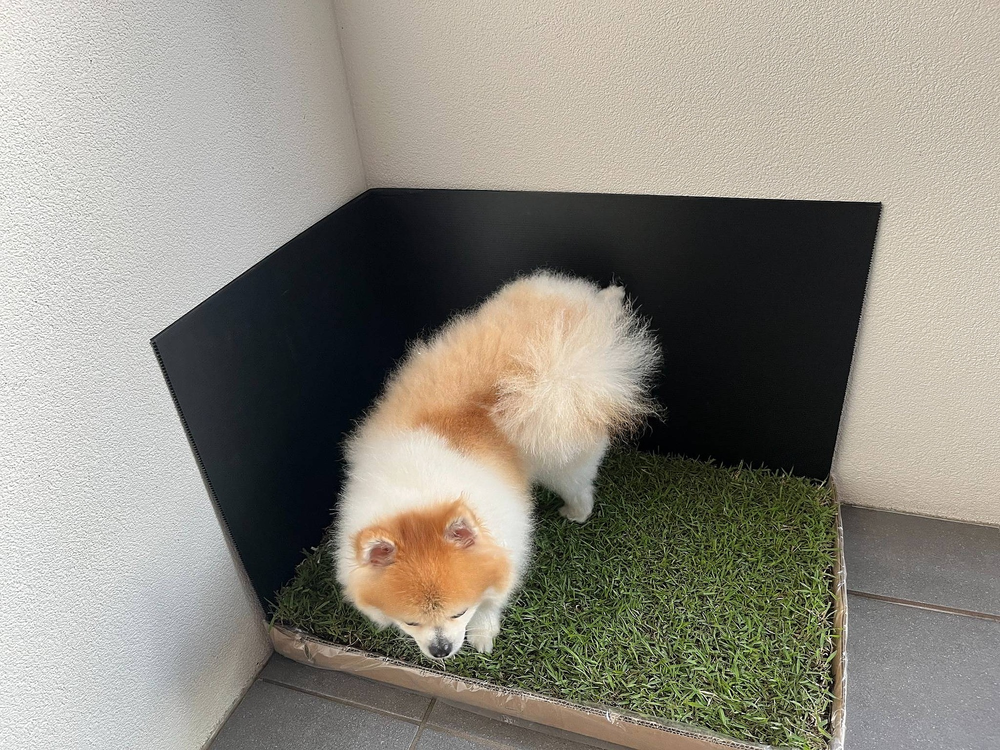
Pee Guard
Extra protection for pups with ambitious aim.
How long does puppy toilet training take?
There is no fixed timeframe, and promising one can make new puppy owners feel like they're falling behind when their puppy is simply learning at their own pace. Age, routine, environment, previous experience and the individual puppy all affect progress.
Look for progression rather than perfection:
- Fewer accidents
- Seeking the toilet area
- Longer periods between toilet breaks
- Eventually signalling that they need to go
If you notice straining, blood, crying while toileting, unusually frequent small wees, a sudden change in habits or a puppy who cannot pass urine, speak with your vet promptly. Toilet training advice should never replace veterinary care.
Bringing home a puppy in Brisbane?
Toilet training is only one part of preparing for a puppy. You'll also want to think about food, sleep, safe spaces, enrichment, grooming, vet care and the small things that make the first week less chaotic.
Start with the Puppy Checklist: Everything You Need Before Bringing Them Home →.


