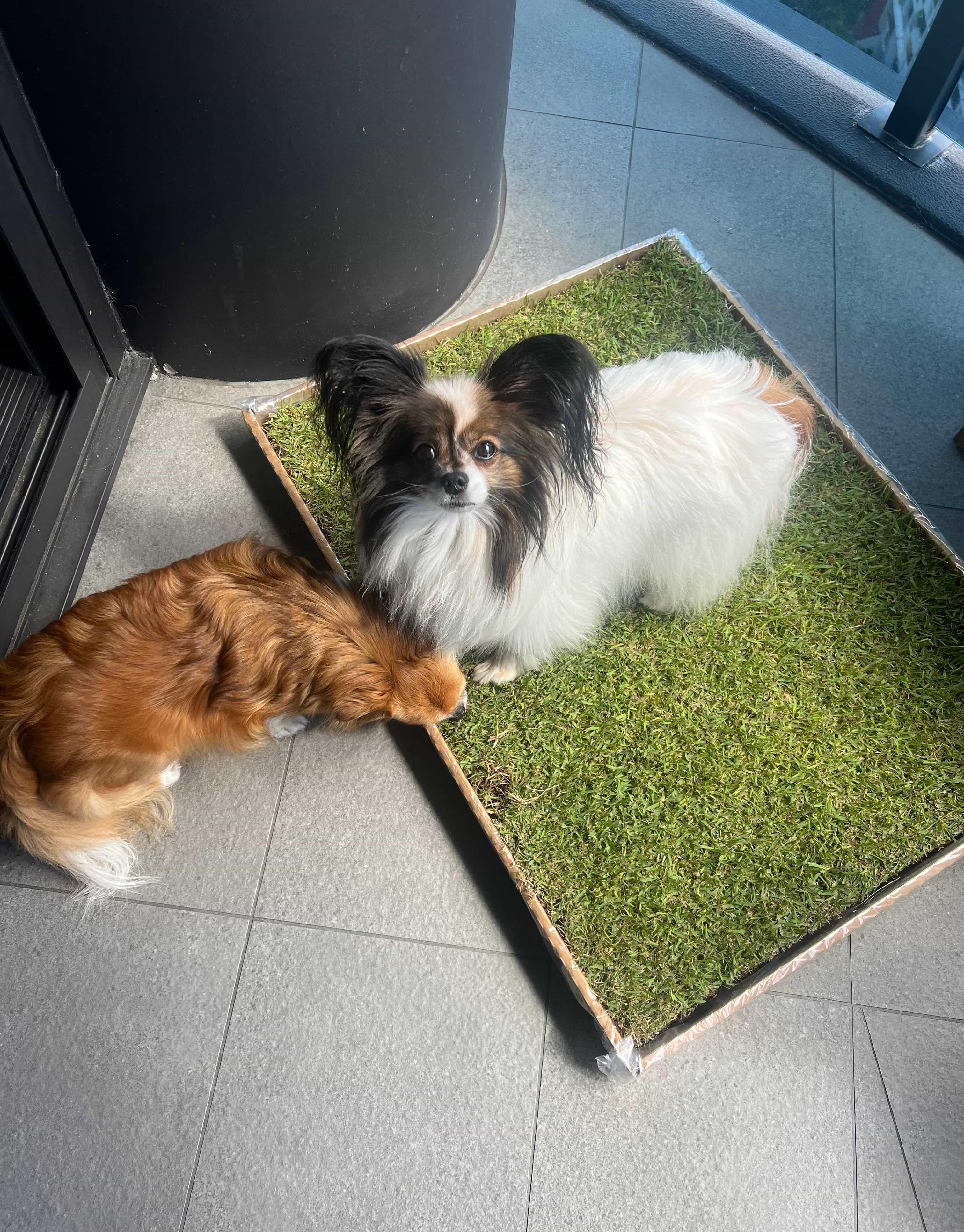

Apartment dogs do not need a backyard. They do need a clear, comfortable toilet option that does not depend on the lift, the weather, or a quick dash down four flights of stairs at 3am.
A balcony grass potty turns a small outdoor space into a mini backyard. It is one of the most useful upgrades you can make as a renter, a high-rise owner or a busy household trying to keep both the dog and the carpet happy.
Your balcony does not need to be big. It just needs to be clear, consistent and easy for your dog to understand.
Why a balcony dog toilet works so well
- It feels more like outside than an indoor pee pad ever will.
- It gives the dog a clear, consistent toilet zone.
- It handles overnight wees, WFH meetings, storms and the “wees that cannot wait for the lift”.
- It works for puppies, small breeds, older dogs and high-rise apartments.
- It supports your routine without replacing walks entirely.
If you are still weighing this up against pads, see pee pads vs real grass for apartment puppies for the side-by-side.
Step 1: Choose the right balcony location
One consistent spot beats a moving target every time. Dogs read location as part of the toilet cue.
- Pick a spot away from food, beds and high-traffic doors.
- Aim for some ventilation. A breezy corner is your friend.
- Mind Brisbane sun. Harsh all-day sun dries grass fast, even in winter.
- Keep liquid away from balcony edges that drain toward neighbours below.
- Check your building or body corporate rules before you commit.
Step 2: Choose the right size
Size matters more than people think. A patch that is too small means missed edges, an overwhelmed surface and a dog who decides the whole thing is too fussy to bother with.
- Small (around 40 x 60 cm): small dogs under 10kg, single users.
- Medium (around 80 x 60 cm): medium dogs, or dogs that like to circle before pooing.
- Large (around 120 x 60 cm): larger dogs, multi-dog homes, or anyone wanting more room.
If you want a tailored recommendation, the easiest path is our Find Your Setup tool. It walks through your dog’s weight, habits and living space and points you at the right size and frequency.
Step 3: Use real grass, not just fake turf
Fake turf has its place, but for balcony use, it brings a few headaches. It needs proper rinsing and disinfecting or it holds odour. DIY hardware store turf can be heavy to handle, awkward to cut and even more awkward to replace once it goes from green-ish to grey-ish.
Real grass solves the “gross reusable mat” problem by being replaced rather than scrubbed. Living grass naturally breaks down waste between deliveries, which keeps the smell down without chemical cleaners. We dig into this in real grass versus astroturf, and the safety angle in why astroturf can be dangerous for dogs.
Step 4: Make it leak-conscious and renter-friendly
Balcony floors and rental bonds are not friends with pooling urine. A proper tray or sealed base is the difference between a setup that works and a setup that ends in a stern email from the building manager.
- Franco Brings small and medium patches use a leak-conscious base built in.
- For larger setups, a reusable tray keeps liquid where it should be.
- Check underneath the patch every week. Spot-clean any drips.
- Do not let urine pool. A breeze, a tilt or a quick wipe goes a long way.
Step 5: Train the dog to use the balcony
A great setup will not train your dog on its own. The good news: it is not complicated.
- Start first thing in the morning, before the usual walk.
- Keep your dog calmly on lead near the patch.
- Use one cue phrase, said calmly. Same phrase every time.
- Reward immediately, right on the grass, within a couple of seconds.
- Keep the patch in the same spot for at least the first week or two.
- Offer the balcony before walks while you are training, not instead of them.
- Do not punish accidents. Clean with an enzymatic cleaner and move on.
If your dog sniffs the grass but refuses to wee on it, that is normal first-week behaviour. The full troubleshooting guide is in my dog will not use the grass potty.
When is a balcony dog toilet most useful?
- New puppy toilet training, when the lift trip is too slow.
- Before full vaccinations, when outdoor exposure is limited (check with your vet).
- High-rise apartments where stairs are not an option in a hurry.
- WFH meetings where you cannot disappear for 20 minutes.
- Rainy nights, storm warnings and that Brisbane summer humidity.
- 3am toilet breaks, especially with young puppies.
- Older dogs who struggle with long walks or stairs.
- Small dogs who hate cold or wet pavements.
- New babies and busy households where dog walks get squeezed.
- Dogs with upset stomachs that need a quick, clean exit.
What about smell?
Smell is the question most renters and apartment owners ask first, and fairly so. The good news: a balcony grass setup, looked after properly, should not perfume your living room.
- Pick up poo immediately, every time. No exceptions.
- Replace the grass on a regular schedule. Weekly works for most dogs.
- Keep the area ventilated. A breeze is a free deodoriser.
- Avoid leaving urine to pool under or around the patch.
- Use an enzymatic cleaner for any accidents that miss the tray.
- Skip the heavy ammonia-based cleaners, they can attract repeat accidents.
Common setup mistakes
- Choosing a patch that is too small for a dog that circles before pooing.
- Moving the patch around the balcony every few days.
- Putting the patch in harsh, all-day Brisbane sun.
- Letting poo sit for hours before clean-up.
- Expecting instant use with no training routine.
- Treating the grass area as a play mat between toilet trips.
- Keeping rugs or soft mats right next to the patch in early training.
The simple balcony setup checklist
- Correct grass size for your dog.
- One consistent location on the balcony.
- Leak-conscious tray or sealed base.
- Some shade and ventilation.
- Poo bags within arm’s reach.
- A short, clear cue phrase you actually like saying.
- High-value treats for first-week training.
- Enzymatic cleaning spray for accidents.
- A replacement schedule that suits your dog’s usage.
Renter-friendly notes
- Check your lease and body corporate rules before installing anything fixed.
- Stick with a tray or sealed base so liquid never reaches the floor.
- Avoid drilling, sticking down anything permanent or modifying the balcony itself.
- If you move, the whole setup moves with you. No bond drama.
Does a balcony grass potty replace walks?
No, and it should not. Dogs need walks for exercise, mental stimulation and the joy of sniffing every single tree on the block. A balcony toilet handles convenience and emergencies, especially overnight, in storms or when life gets messy. Walks handle the rest.
For deeper apartment toilet training advice, see our guide to toilet training your dog in an apartment.
Ready to turn your balcony into a tiny backyard? Use Find Your Setup to pick the right grass size, browse the full store, then check the delivery suburbs page to confirm we come to you.