
New puppy, second floor, lift on the blink and a small bladder that does not understand patience. If you are an apartment owner, the first weeks of toilet training can feel like a full-time job in shoes, leads and lobby dashes.
Most owners end up asking the same question: pee pads, or a real grass potty? They are not lazy. They are trying to survive puppy training in a building, often with a 3am toilet break thrown in for fun. The surface you choose now can quietly shape what your puppy learns about where the toilet actually is.
Pee pads can be useful in some situations. But for most apartment puppies, real grass is the better long-term training surface, especially if your dog will eventually toilet outside, on a balcony, or on grass. Here is the honest comparison.
The real problem apartment puppy owners are trying to solve
Apartment toilet training is not the same as backyard toilet training. The trip downstairs is rarely quick.
- Puppies need many toilet breaks a day, sometimes every couple of hours.
- A “quick wee” can become shoes, lead, hallway, lift, lobby and street.
- Overnight wees do not respect business hours.
- WFH meetings rarely line up with bladder timing.
What owners want is a setup that protects floors, supports the routine, and teaches their dog the right habit without 47 stair trips a day.
What pee pads do well
Let us be fair. Pee pads are not the villain.
- They are cheap and easy to grab from any pet shop or supermarket.
- They are a handy emergency option, especially overnight.
- Before full vaccinations, when outdoor exposure is limited, they can bridge the gap (always check with your vet).
- They can protect floors if used carefully and replaced often.
- Some dogs do learn to use both pads and outside.
If you have used pee pads, you have not done anything wrong. The question is what they teach your dog about toileting.
Where pee pads can go wrong
Puppies learn the toilet through two main signals: the surface under their feet, and the spot they are standing in. Pee pads are soft, flat and absorbent, which is exactly what they need to be to do their job. The catch is that your rug, the bath mat by the shower, your towel on the floor, the dog bed in the corner and the corner of the carpet also fit that description.
Some puppies make the leap that “soft surface equals toilet”. Once that habit forms, it can be frustrating to unwind, and you end up cleaning up wee from places that were never supposed to be a toilet.
Pee pads may solve tonight’s accident, but they can sometimes create tomorrow’s rug problem.
Transitioning a pad-trained puppy to outdoor toileting also takes extra work. The pad has to slowly move toward the door, then outside, then disappear. It is doable. It is just an extra step.
Why real grass makes more sense for many puppies
Real grass gives your puppy the same surface they will be expected to toilet on for the rest of their life: parks, footpath strips, friends’ backyards, your eventual house with a yard. The texture is real. The smell is real. The signal is consistent.
- It is the surface dogs naturally choose outside.
- It does not feel like a rug, a bath mat or a bed.
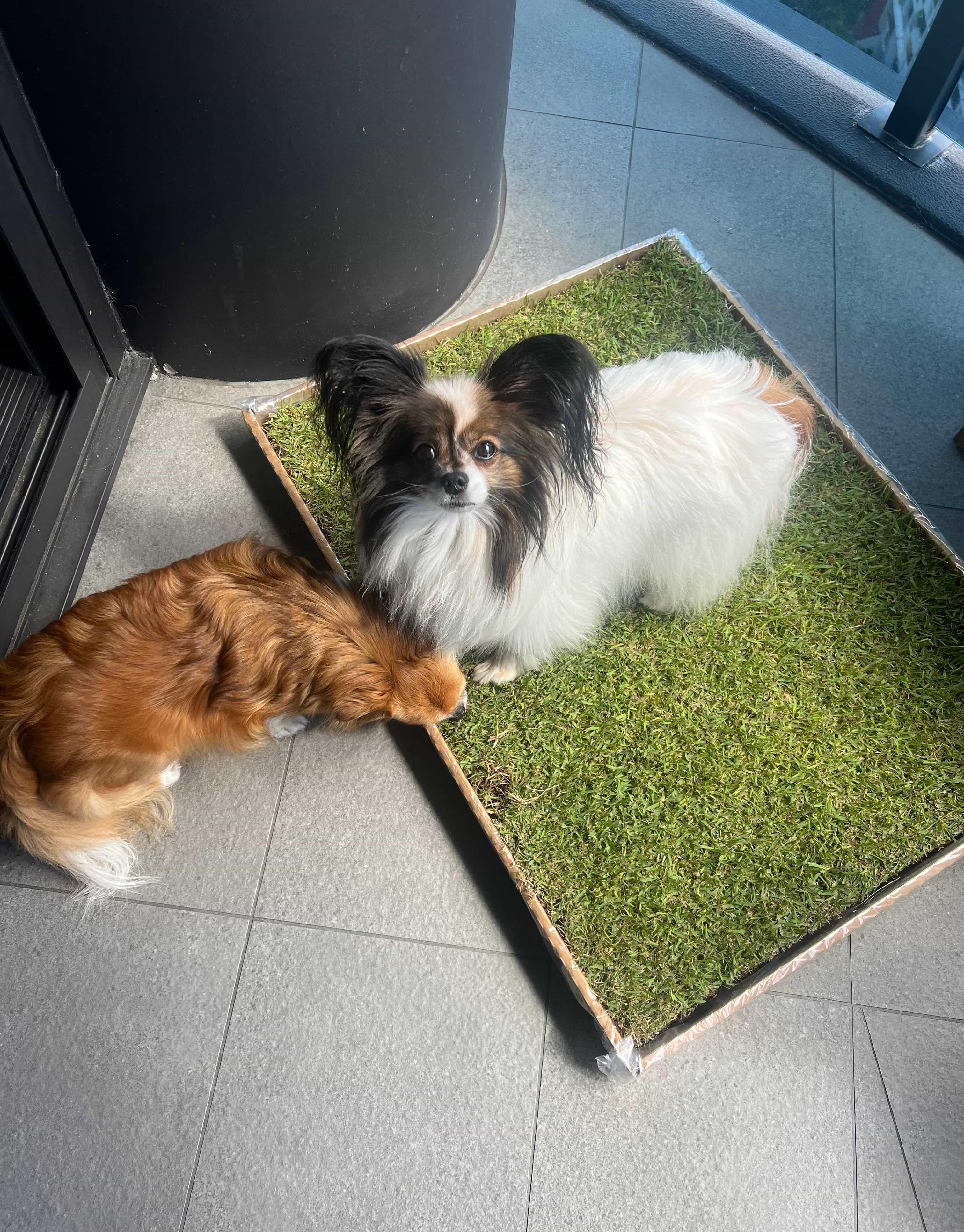
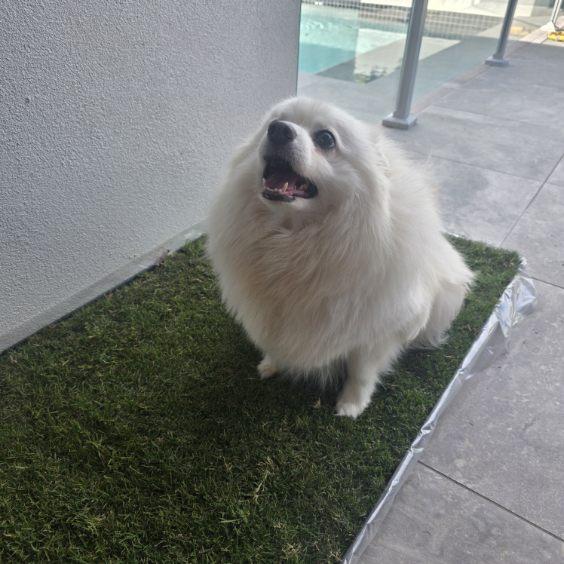
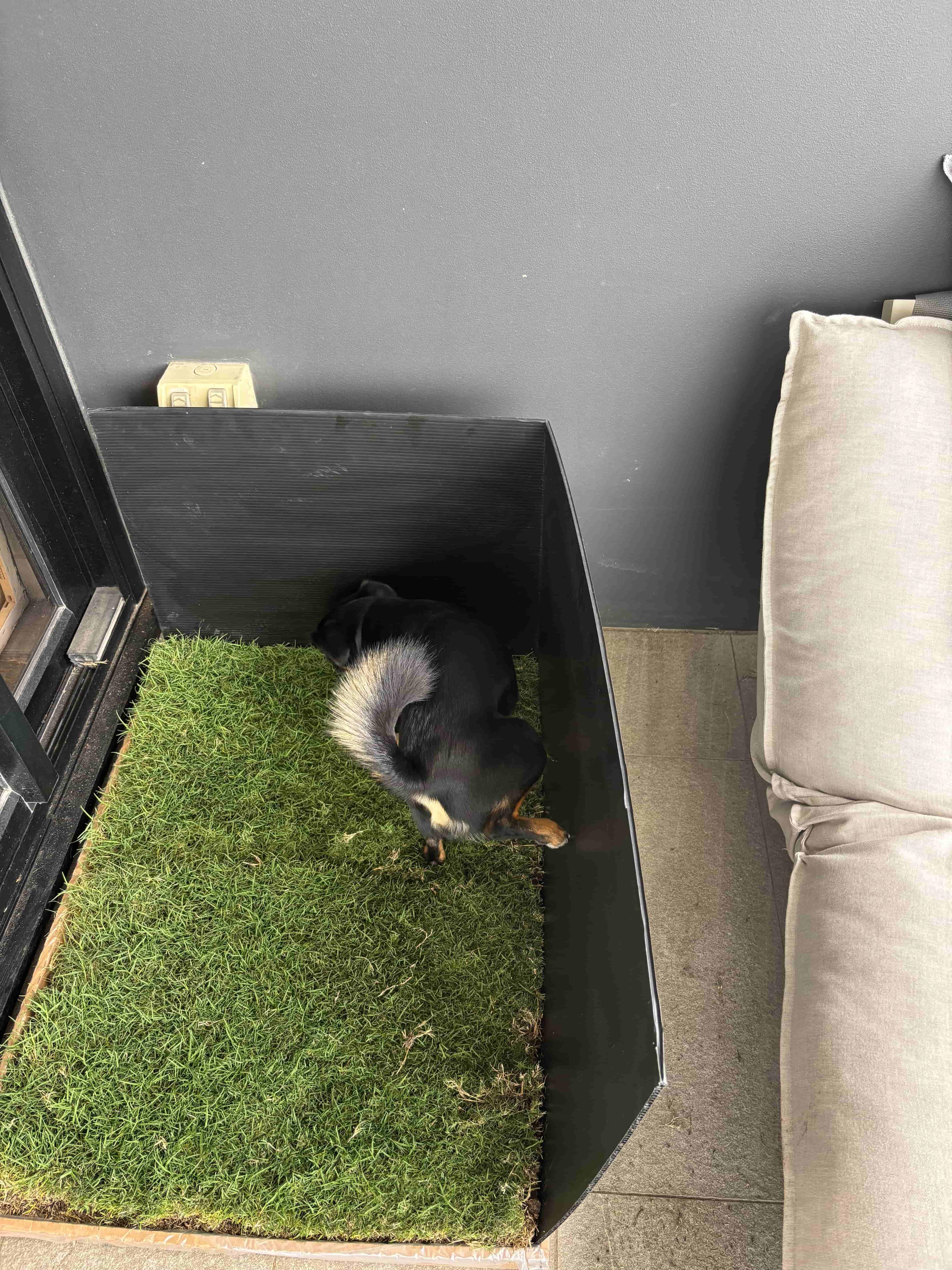
- Set up on a balcony, it creates a clear, outdoor-style toilet zone.
- Routine and reward stack on top of one clear cue: this patch is the toilet.
- The eventual transition to outside is shorter, because the surface barely changes.
Teach grass, not rugs.
Pee pads vs real grass: side by side
| Feature | Pee pads | Real grass potty |
|---|---|---|
| Training surface | Soft and flat, similar to rugs and bath mats | Real grass, the same surface you want long term |
| Risk of rug confusion | Higher, especially with young puppies | Lower, the surface is distinctly different |
| Smell management | Holds odour until binned, especially under furniture | Living grass naturally breaks down waste; replaced regularly |
| Balcony suitability | Can blow around and look out of place | Designed for balconies and patios, leak-conscious base |
| Outdoor transition | Often needs a slow phase-out and pad migration | Shorter jump, since the surface is already grass |
| Cleaning | Bin the pad, scrub any misses on the floor | Pick up poo, swap the patch on delivery day |
| Best use case | Short-term backup, emergencies, overnight, illness | Long-term toilet zone for apartments and balconies |
What about fake grass?
Fake grass sits in the middle. The texture is closer to real grass, which can help, but it needs proper washing or it starts to smell. Many owners find a DIY astroturf patch gets gross over time, attracts flies and never quite shakes that lingering odour even after a hose down. We unpack this in more detail in real grass versus astroturf and why astroturf can be dangerous for dogs.
A fresh real grass patch sidesteps the “gross reusable mat” problem because the surface gets replaced, not scrubbed.
When pee pads might still be useful
There are real moments where a pad earns its place:
- Before full vaccinations, if your vet has restricted outdoor exposure.
- Overnight emergencies, especially in the first weeks at home.
- Illness or diarrhoea where you need a high-volume backup surface.
- Very young puppies who cannot make it to the balcony in time.
- Apartments with no balcony or outdoor access at all.
Treat them as a temporary backup, not the main toilet. The goal is for the grass to be where your puppy goes by default, and pads to be the rare exception.
The best setup for apartment puppies
If you are starting from scratch and want to give your puppy the best shot, here is the simple version:
- Put real grass on the balcony, in one consistent spot.
- Keep your puppy on lead for the first toilet trips, so the area is not playtime.
- Use one calm cue phrase, such as “go wee” or “go potty”.
- Reward immediately after success, within a couple of seconds, not back inside.
- Try after meals, naps, play and first thing in the morning.
- Keep doing outdoor walks too, especially as vaccinations allow.
- Use Find Your Setup to pick the right grass size for your puppy.
If your puppy refuses to use the grass at first, take a breath. It is common, and there is a clear way through it. We have written a full first-week guide in my dog will not use the grass potty: what should I do. For a deeper walkthrough on the whole apartment routine, see our guide to toilet training your dog in an apartment.
So, which is better?
For most apartment puppies, real grass wins. It teaches the surface you actually want your dog to learn, fits naturally into a balcony setup, and avoids the rug confusion that pee pads can quietly create.
Pee pads still have a role as a short-term backup. They are not bad. They are just better as a safety net than as the main toilet.
A practical Brisbane first-week checklist
- Pick the right grass size for your puppy’s weight and growth.
- Choose one consistent location, ideally on the balcony.
- Set up a leak-conscious base or tray for renter peace of mind.
- Keep treats and a soft lead near the door.
- Use the same toilet cue every time.
- Keep a small enzymatic cleaner handy for indoor accidents.
- Plan a regular grass refresh so the patch never gets gross.
Need real grass without the Bunnings run? Franco Brings delivers fresh dog potty grass across selected Brisbane suburbs. Choose your size with Find Your Setup, or check if we deliver to your suburb on the delivery suburbs page.